

Wildlife Damage Repair That Stops Repeat Intrusions
- AllstarWildlifeLLC
- 3 days ago
- 5 min read
A raccoon can pull apart roof vents in a single night. Squirrels can chew through fascia boards, rats can contaminate attic insulation, and bats can turn a small gap near a roofline into a recurring problem. Wildlife damage repair is what turns animal removal into a lasting solution. It addresses the holes, damage, debris, and contamination left behind so your home or business is safe, clean, and difficult for animals to enter again.
For property owners in Lexington, Columbia, Charleston, and surrounding South Carolina communities, the first concern is usually getting the animal out. That matters. But trapping or removing an animal without repairing the access point can leave the same property open to the next raccoon, squirrel, rat, or bat looking for shelter.
Animal Removal Is Only the First Step
Wildlife looks for the same things people value in a building: protection from weather, warmth, reliable nesting space, and a nearby food source. Attics, crawlspaces, chimneys, roof returns, sheds, and wall voids can provide all of them.
Animals rarely enter through a large, obvious opening. A rat can use a gap around a pipe or utility line. Squirrels may enlarge a weak spot along the eaves. Raccoons can tear open loose soffit panels, damaged vents, or vulnerable roofing materials. Bats may use a narrow gap around flashing, trim, or a roofline.
That is why a complete service should begin with an inspection of the whole structure, not just the room where noise was heard. The goal is to identify the animal, locate active entry points, find secondary weak areas, and determine how much damage has occurred before repairs begin.
Humane removal comes first when animals are active inside. Sealing a hole too soon can trap wildlife in a wall or attic, creating odor problems, additional damage, or young animals separated from their mother. Timing matters, especially during nesting and maternity seasons. The right repair plan protects your property without creating a new problem inside it.
Common Damage That Needs Professional Attention
The visible hole is often only part of the issue. Wildlife can damage materials gradually over weeks or months, and the evidence may be hidden behind insulation, under decking, or inside a crawlspace.
Roof and soffit damage is especially common with squirrels, raccoons, and birds. Signs include torn vent screens, bent or missing soffit panels, lifted shingles, chewing along the roof edge, and holes near gutters or roof returns. These openings can also allow rain and humidity into areas that were meant to stay dry.
In attics, rodents and squirrels may chew wiring, shred insulation for nests, and leave droppings throughout the space. Damaged insulation does more than look unpleasant. It can lose its effectiveness, hold odors, and spread contaminated material through areas that are difficult to access. If animals have used insulation extensively, spot cleaning may not be enough.
Crawlspaces can be affected by opossums, skunks, rats, snakes, and other animals using the area for cover. Damaged foundation vents, loose crawlspace doors, torn vapor barriers, droppings, nesting debris, and odors can all indicate an active or previous wildlife issue. Moisture in these spaces makes matters worse by attracting insects and contributing to wood deterioration.
Commercial buildings face many of the same risks, often on a larger scale. Loading areas, roof penetrations, utility access points, dumpster areas, and storage buildings can draw rodents, birds, and raccoons. For landlords and property managers, a small unrepaired opening can quickly become a repeat maintenance call, tenant complaint, or sanitation concern.
What Wildlife Damage Repair Should Include
Effective wildlife damage repair is not a one-size-fits-all patch. The materials and approach should match the animal, the location of the damage, and the condition of the structure. A repair that keeps out mice may not stop a determined raccoon. A screen added over one vent will not solve a squirrel problem if the animal can still access a weak roof return nearby.
A complete repair plan commonly includes four connected parts:
Removing the animal or confirming it has safely exited the structure
Repairing holes, damaged vents, soffits, fascia, trim, screens, or crawlspace access points
Excluding future entry with properly fitted barriers and reinforced vulnerable areas
Cleaning contaminated areas and replacing damaged insulation or materials when needed
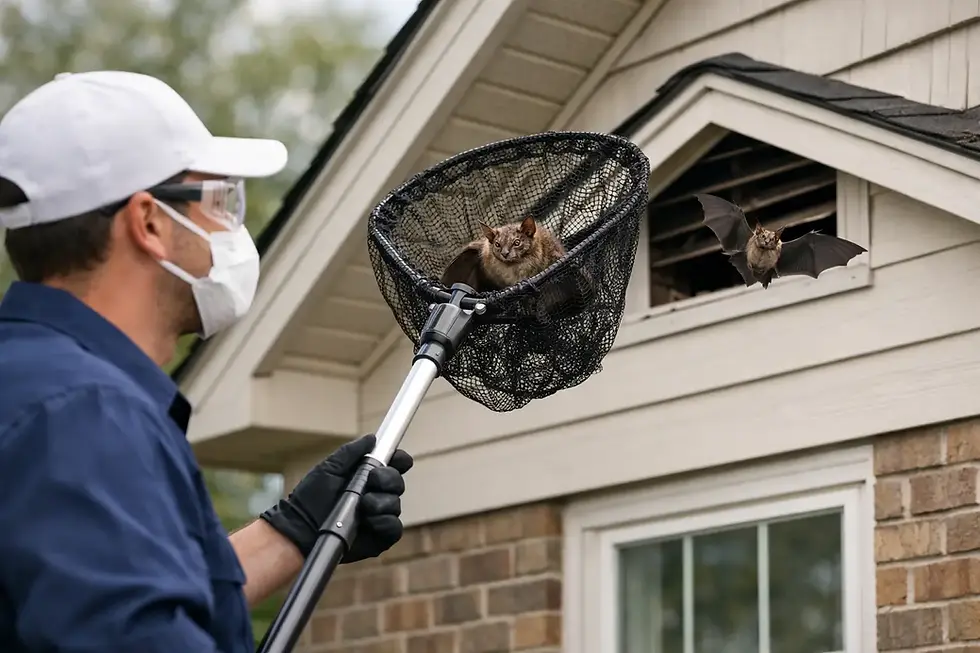
The order is critical. Repairs should be completed after the active wildlife issue is handled, with exclusion work designed around the animal involved. For example, bat removal may require specialized one-way devices that let bats leave but prevent re-entry before final sealing takes place. Rodent exclusion often focuses on small construction gaps, pipe penetrations, vents, and utility lines. Raccoon repairs may require stronger materials at roof-level access points.
The best repair work also considers how the building sheds water and moves air. Closing a vent improperly can create moisture or ventilation problems. Using a temporary-looking patch in a prominent roofline may protect the opening but leave the property looking neglected. Professional repairs balance durable exclusion with the practical needs and appearance of the structure.
When Cleanup and Insulation Work Are Necessary
Not every wildlife visit requires a full attic cleanup. A single bird nesting near an exterior vent is different from a rat infestation that has spread droppings and nesting material across insulation. The scope depends on the animal, how long it was present, and the affected area.
Cleanup becomes especially important when droppings, urine, nesting debris, dead animals, or strong odors are present. These conditions can attract other pests and make a property uncomfortable long after the animal is gone. In enclosed spaces, contamination may be concentrated around a nest or widespread across an attic or crawlspace.
Damaged insulation may need removal and replacement when it is heavily soiled, compressed, or filled with nesting material. This is not simply a cosmetic upgrade. Fresh insulation can help restore energy efficiency while removing odor sources that may encourage other animals to investigate the space.
Dead animal removal should also be handled promptly. A carcass inside a wall, attic, crawlspace, or under a structure can produce persistent odor and attract flies or scavenging insects. Locating the source without causing unnecessary damage takes experience, especially when the animal is hidden in a difficult area.
Warning Signs You Should Not Ignore
Wildlife damage often starts quietly. You may hear scratching over a bedroom ceiling before seeing any exterior damage. A musty odor in a crawlspace, a sudden increase in flies, insulation around a vent, or droppings near stored boxes may be the first clear signal.
Call for an inspection if you notice repeated animal sounds, daylight visible in an attic, chewed materials, damaged roof vents, droppings, foul odors, or a loose section of soffit or siding. You should also take action when an animal has been removed by someone else but the entry point was never identified and repaired.
Avoid handling droppings, nests, or injured wildlife without proper protection. Wildlife may carry parasites, and contaminated materials can create health concerns. Home remedies and hardware-store patches can be useful for very minor exterior maintenance, but they often fail when an active animal is still inside or when the full extent of damage is hidden.
A Lasting Repair Starts With the Right Inspection
The most reliable result comes from treating wildlife control, repair, and prevention as one job. Allstar Wildlife assesses where animals entered, what they damaged, and which areas need reinforcement so property owners are not left waiting for the next noise in the attic.
If your roofline, attic, crawlspace, or exterior vents show signs of animal activity, do not wait for a small opening to become a larger repair. Schedule an inspection and get a clear plan for humane removal, wildlife damage repair, cleanup, and exclusion. A secure property brings back something every homeowner and property manager deserves: peace of mind when the house gets quiet at night.


Comments