

Wildlife Exclusion Entry Point Sealing That Lasts
- AllstarWildlifeLLC
- 7 days ago
- 5 min read
A raccoon can pull apart a weak roof vent, a squirrel can chew through a soft soffit, and a rat can use an opening no wider than a quarter. Removing the animal is only the first step. Wildlife exclusion entry point sealing is what keeps the next animal from turning your attic, crawlspace, or wall void into a home.
For homeowners and property managers in Lexington, Columbia, Charleston, and surrounding South Carolina communities, a lasting wildlife solution means more than setting a trap. It means finding every active and potential access point, removing animals humanely, sealing the structure with materials that hold up, and addressing the damage left behind.
Why Entry Point Sealing Cannot Wait
Wild animals are persistent because your building offers what they need: shelter, warmth, nesting space, and protection from weather and predators. Once an animal has found a route inside, it may return night after night. If food, young, or nesting material are already inside, the urgency is even greater.
Small gaps become expensive problems quickly. Rodents can contaminate insulation and chew wiring. Squirrels can damage fascia boards and attic ductwork. Raccoons may tear open vents, dislodge shingles, and leave behind heavy contamination. Bats can enter through narrow gaps around rooflines, attic louvers, and utility penetrations, then leave droppings that require careful cleanup.
Sealing an opening without understanding what is happening inside can make the problem worse. An animal may become trapped in a wall or attic, creating odors, damage, and a more difficult removal. Mothers may also be separated from dependent young. That is why proper exclusion starts with inspection and timing, not a quick tube of caulk.
What Professional Wildlife Exclusion Entry Point Sealing Includes
A thorough exclusion job is a property-specific repair process. The work should match the animal, the structure, the season, and the condition of the building.
A Full Exterior Inspection
The first goal is to identify how animals are getting in and where they are likely to try next. A trained wildlife professional checks roof intersections, ridge vents, roof returns, soffits, eaves, chimneys, attic vents, plumbing and utility lines, foundation gaps, crawlspace doors, siding transitions, and areas damaged by moisture or rot.
The obvious hole is not always the only one. A raccoon may enter through a torn vent while mice use gaps at the foundation and squirrels exploit a loose fascia board nearby. Closing one opening while leaving several others available often leads to another service call when the animal simply relocates within the same structure.
Humane Removal Before Final Repairs
Active entry points need special handling. Depending on the animal, professionals may use one-way exclusion devices that allow animals to leave but prevent their return. Trapping may be appropriate in some situations, particularly when an animal is injured, trapped, aggressive, or unable to exit safely.
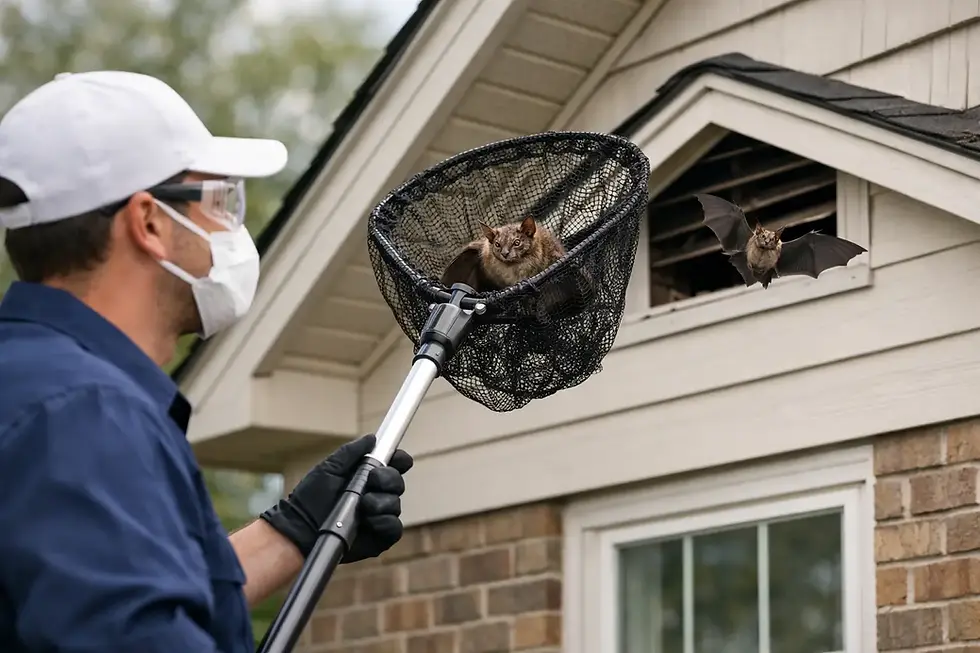
Bats require extra care. Their removal must be timed around pup-rearing periods so young bats are not left inside. Raccoons, squirrels, and other denning animals may also have young in an attic or crawlspace. The right approach depends on the evidence found during inspection, not a one-size-fits-all repair plan.
Durable Materials That Match the Opening
Good exclusion repairs are designed to resist the animal that caused the damage. Lightweight screen, expanding foam, and temporary patch materials may look acceptable for a short time, but determined wildlife can often tear, chew, or push through them.
Professionals may reinforce vulnerable areas with heavy-gauge screening, metal flashing, properly fitted vent guards, hardware cloth, repaired wood, and secured crawlspace barriers. The material matters, but installation matters just as much. A strong product installed loosely around an uneven roofline still leaves a gap.
The goal is not to cover a hole. It is to restore the building envelope so animals cannot reopen the same weak point.
Common Entry Points Around South Carolina Properties
South Carolina homes face humid weather, heavy rain, heat, and storm-related wear that can expose entry points over time. Older homes may have settling gaps and aging wood. Newer construction can have open utility penetrations, unprotected vents, or unfinished transitions that wildlife finds quickly.
Roof and attic areas are frequent trouble spots because they are elevated, warm, and harder for owners to inspect closely. Look for bent vent covers, missing or loose soffit sections, stained areas near eaves, displaced shingles, and debris below a roofline. Scratching after dark, thumping overhead, chirping, or a strong attic odor may indicate an active issue.
At ground level, crawlspace openings, broken foundation vents, gaps around pipes, loose access doors, and damaged lattice can allow rodents, opossums, skunks, snakes, and other animals underneath a building. A crawlspace may stay out of sight, but it should not stay out of mind. Moisture, nesting materials, droppings, and damaged insulation can create costly conditions before the problem becomes visible indoors.
Commercial properties need the same attention, especially around loading areas, rooftop equipment, dumpsters, exterior utility rooms, warehouse doors, and gaps where multiple building materials meet. One unsealed opening can affect storage areas, tenant spaces, equipment rooms, or customer-facing areas.
Why DIY Sealing Often Falls Short
A homeowner can sometimes handle a clearly inactive, minor repair. Replacing a damaged vent cover or sealing a small non-wildlife-related crack may be reasonable when there is no evidence of animals inside. The risk comes from assuming the opening is inactive without checking.
DIY work can also create drainage or ventilation problems if vents are blocked rather than protected. Attics and crawlspaces need proper airflow. The right repair keeps animals out without causing moisture buildup, overheating, or code concerns.
There is also a safety factor. Roof work, ladders, contaminated insulation, animal waste, and potentially defensive wildlife are not casual weekend tasks. If you hear movement in a wall, see droppings in an attic, find chewed wiring, or notice an opening near a roofline, a professional inspection is the safer choice.
Repairs Matter After the Animals Leave
Wildlife exclusion is most effective when it includes cleanup and damage repair. An animal-free attic can still contain urine, droppings, nesting debris, damaged insulation, and lingering odors that attract other animals. Damaged wood or loose vents can also reopen under the next storm.
The scope depends on the infestation. A brief mouse issue may only need localized sanitation and sealing. A long-term raccoon, bat, or rodent problem may require contaminated insulation removal, attic or crawlspace cleanup, odor treatment, and structural repair. Landlords and property managers should document these conditions promptly, especially before a unit is occupied again.
Allstar Wildlife approaches exclusion as part of a complete property solution: humane removal, entry-point repairs, cleanup, and prevention. That approach helps protect the structure as well as the people living or working inside it.
When to Schedule an Exclusion Inspection
Do not wait for an animal to appear in a living space. An inspection is worthwhile when you hear activity overhead or in walls, notice droppings, smell a persistent odor, see damage around vents or soffits, or spot animals repeatedly traveling to the same area of the building.
It is also smart to schedule an inspection after a storm damages roofing or siding, before listing a property for sale, after purchasing an older home, or when preparing a seasonal property for occupancy. Early repairs are usually simpler than repairing a full infestation.
A secure property starts with careful observation and the right repair at the right time. If wildlife has found a way in, act before a small opening becomes a larger problem. Professional exclusion can restore the comfort, cleanliness, and peace of mind your home or business deserves.


Comments