

Commercial Wildlife Control for South Carolina Properties
- AllstarWildlifeLLC
- 4 days ago
- 6 min read
A raccoon in a restaurant dumpster enclosure, bats above a retail ceiling, rats in a warehouse, or birds nesting around a loading dock can become much more than a nuisance. Commercial wildlife control protects the people, inventory, building systems, and reputation behind your property. For South Carolina business owners and property managers, the goal is not simply to get an animal out. It is to correct the conditions that allowed it in and keep the issue from disrupting operations again.
Wildlife problems can escalate quickly in commercial spaces. A single opening around a roofline, utility conduit, crawlspace vent, or damaged soffit can give animals direct access to insulation, wiring, stored materials, and occupied areas. The longer activity continues, the more likely it is that contamination, odors, costly repairs, and repeat infestations will follow.
Why commercial properties need a different response
Commercial buildings have more moving parts than most homes. Multiple tenants, delivery schedules, employee safety requirements, food storage, customer traffic, and large roof or exterior areas can all affect how a wildlife problem should be handled. A solution that works at one small office may not be appropriate for an apartment community, warehouse, medical office, restaurant, retail center, or managed portfolio.
That is why trapping alone is rarely a complete answer. Removing the visible animal may provide immediate relief, but another animal can use the same access point if openings remain. In some cases, young animals may still be inside after an adult is removed. In others, a nest, droppings, urine, or damaged insulation can leave behind odor and health concerns even after the animal is gone.
A professional inspection identifies where animals are entering, what species is involved, whether there is an active nest or den, and what damage has already occurred. From there, the work can be planned around your property, your business hours, and the need to protect tenants, staff, and customers.
Commercial wildlife control starts with the whole property
Effective commercial wildlife control is a process, not a one-visit trap placement. The right approach begins with a careful assessment of the building and surrounding grounds. Wildlife does not always enter at the obvious spot. Rats may travel along utility lines, squirrels may use overhanging limbs to reach the roof, and raccoons can exploit a loose vent cover or weakened fascia board several stories above ground.
A complete evaluation looks at roof edges, vents, soffits, exterior walls, crawlspaces, attic areas, loading zones, dumpsters, drainage features, and nearby vegetation. On larger sites, it may also include detached storage buildings, utility rooms, fencing, retention ponds, and other areas that create cover, water, or food sources.
Once the source of activity is clear, humane removal can begin. The method depends on the animal, the location, the season, and the risk to people and the property. Bats, birds, snakes, raccoons, squirrels, rodents, opossums, skunks, armadillos, beavers, and feral hogs all require different handling. A responsible plan accounts for animal behavior while focusing on safe, lawful removal and a lasting result for the customer.
Exclusion is what helps stop repeat calls
Exclusion means closing the gaps and vulnerabilities animals use to access a building. This can include securing vents, repairing damaged soffits, sealing openings around penetrations, reinforcing weak areas, screening appropriate access points, and correcting wildlife-related damage.
The details matter. Sealing a building too early can trap animals inside, while using the wrong material can allow determined animals to chew or pull their way back through. Timing also matters when young wildlife may be present. An experienced technician can determine when exclusion should occur and how to complete it without creating a new problem inside the structure.
For commercial properties, exclusion work should be durable and practical. It needs to hold up to weather, routine maintenance, and the normal activity around a busy building. It should also preserve the appearance and function of the property rather than creating a temporary patch that fails a few months later.
Common wildlife risks for South Carolina businesses
The wildlife issue on your property depends on its location, construction, and use. Buildings near trees, wooded areas, waterways, open land, or food waste are often more exposed. Still, even a well-maintained commercial property can have a hidden opening that attracts animals.
Rodents can contaminate stored goods, chew wiring, damage insulation, and reproduce quickly in wall voids, attics, and storage areas. Rats and mice may be drawn to food sources, standing water, clutter, and exterior gaps around the structure.
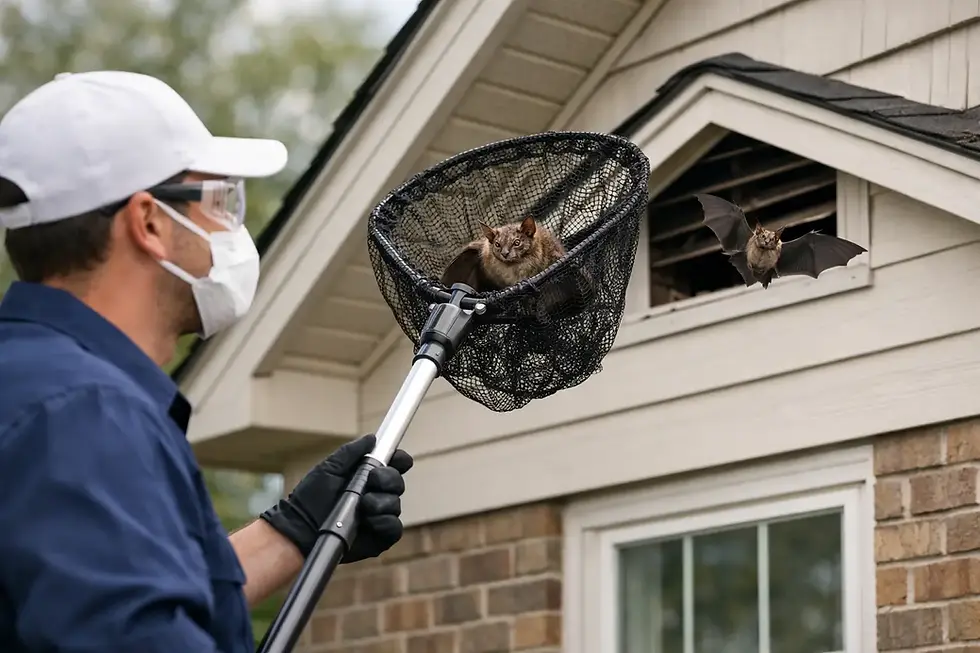
Raccoons and squirrels commonly cause damage in attics, soffits, rooflines, and crawlspaces. Their activity can disturb tenants or employees and leave behind insulation damage, droppings, odors, and torn building materials. Bats may gather in attic spaces, wall voids, or gaps near rooflines, creating concerns that require careful exclusion rather than a rushed repair.
Birds can create persistent problems around signs, awnings, rooftops, loading docks, and equipment areas. Nesting materials and droppings can affect appearance, create slip hazards, block drainage, and damage surfaces. Snakes may enter storage areas, crawlspaces, or landscaped portions of a property while following prey or seeking shelter. In more rural or undeveloped areas, beavers and feral hogs can damage land, drainage systems, banks, landscaping, and site infrastructure.
Each situation calls for its own strategy. The best solution for bird pressure around a loading dock will not be the same as the right response to raccoons in a multifamily attic or rodents in a restaurant-adjacent utility area.
Cleanup and repairs protect more than appearances
Wildlife removal is only one part of restoring a commercial property. Droppings, urine, nesting debris, and damaged insulation can remain after the animals leave. These conditions may contribute to odors, attract additional pests, and make a vacant unit, storage area, attic, or crawlspace unsuitable for normal use.
Cleanup may involve removing contaminated insulation or nesting material, sanitizing affected areas, and addressing odors at the source. When animals have damaged a roofline, vent, wall, or crawlspace opening, repairs should be completed as part of the prevention plan. Leaving those issues unresolved invites the next animal to move in.
For landlords and property managers, this full-property approach can reduce repeated maintenance requests and help prepare a unit or building for tenants, buyers, inspections, or renovation work. For business owners, it helps protect operations from an animal issue that could otherwise become visible to customers or disrupt staff.
What to do when wildlife is active at your business
If an animal is inside an occupied area, employees should keep their distance and avoid trying to trap, chase, or feed it. Closing interior doors when safe to do so can limit where the animal travels. Keep customers away from the area and contact a wildlife professional promptly, especially when bats, raccoons, snakes, or aggressive animals are involved.
For activity in an attic, wall, crawlspace, or roofline, do not seal the opening on your own. You may block an animal inside or separate young from their mother. Instead, document what you have noticed: sounds, droppings, visible damage, odor, the time of day activity occurs, and the exact location. Those details can help speed up the inspection and treatment plan.
It also helps to review exterior conditions while waiting for service. Secure dumpster lids, remove accessible food waste, address standing water where possible, and keep landscaping from making roof access easy. These steps do not replace removal or exclusion, but they can reduce the attractions that encourage wildlife to stay nearby.
A dependable plan for managers and owners
The right wildlife provider should explain what animal is involved, where it is getting in, what work is needed now, and what will prevent a recurrence. You should not be left guessing whether the issue was actually resolved or whether repairs and cleanup are still needed.
Allstar Wildlife serves commercial properties throughout the greater Lexington, Columbia, and Charleston areas with humane removal, exclusion, cleanup, and repair solutions tailored to the site. Whether you manage one storefront or multiple properties, a fast and thorough response can protect your building while giving tenants, employees, and customers confidence that the situation is being handled properly.
When wildlife starts using your property as shelter, acting early is usually the least disruptive option. A professional inspection can turn an urgent animal problem into a clean, secure property that is ready for business again.


Comments