

Bats in Attic? Safe Removal and Lasting Repair
- AllstarWildlifeLLC
- 2 days ago
- 5 min read
A faint scratching sound after sunset, a chirp behind a wall, or small dark droppings near the attic access can quickly turn into a serious property concern. Bats in attic spaces are not a problem to ignore or seal away overnight. The animals may be protected, young bats may be unable to leave during certain seasons, and an improper repair can trap bats inside your home.
The right response is calm, humane, and thorough: identify how the bats entered, remove them safely, close the access points at the right time, and address the contamination they leave behind. That is how a homeowner or property manager gets real peace of mind instead of a temporary quiet attic.
How to Tell if You Have Bats in Attic Spaces
Bats are most active from dusk through the early morning, so the strongest evidence often appears around sunset. You may see small animals slipping out from a roof edge, vent, chimney gap, soffit, or damaged fascia. Their entry openings can be surprisingly small, especially where building materials meet or have pulled apart over time.
Inside, bat droppings, known as guano, may collect beneath a roosting area or near an attic opening. Guano can resemble mouse droppings at a glance, but it often breaks apart more easily and may contain shiny insect fragments. A persistent, earthy odor, staining on exterior siding, and squeaking or fluttering sounds can also point to bat activity.
Do not handle droppings or attempt to identify a bat up close. If a bat is found in a living area, particularly a bedroom where someone may have been sleeping, treat the situation seriously and contact local health authorities or a qualified wildlife professional for guidance. Direct contact with bats should always be avoided.
Why Bats in an Attic Need Prompt Attention
Bats are valuable outdoors because they eat insects, but your attic is not a safe place for a colony to roost. Over time, guano and urine can create strong odors, stain ceilings, damage insulation, and contaminate surfaces. In a larger or long-running infestation, the waste buildup can be significant enough to require insulation removal and professional cleanup.
The health concern is not limited to a visible pile of droppings. Disturbing dry guano can send particles into the air, which is why sweeping, vacuuming, or using a leaf blower in the attic is a bad idea. A wildlife removal team can assess the affected area and use the appropriate protective procedures for cleanup and sanitation.
There is also a property-damage issue. Bats may not chew wood like rodents, but the gaps they use are evidence that your home has vulnerable areas. Loose vents, warped fascia, broken screens, roofline gaps, and unsealed utility openings can allow other wildlife to enter later. A bat problem is often the first warning that the exterior needs attention.
Why Sealing the Hole Right Away Can Make Things Worse
Finding a suspected opening can make a quick patch seem like the obvious fix. It is not always the safe fix. If bats are still inside when an opening is sealed, they can become trapped in the attic, die in inaccessible areas, or search for another route into your living space.
Timing matters even more when flightless young are present. Excluding adult bats before young bats can leave can separate them from the colony and create a much larger issue inside the structure. Humane removal depends on identifying the species, the size of the roost, the entry and exit points, and the seasonal conditions before exclusion work begins.
Repellents, bright lights, loud noises, and store-bought deterrents rarely solve an established attic roost. They may briefly disturb the animals, but they do not repair the opening that allowed access. Worse, they can push bats deeper into wall voids or other difficult areas of the home.
Our Process for Safe Bat Removal and Exclusion
A lasting solution starts with a careful inspection, not a guess. A qualified wildlife technician examines the attic, roofline, vents, eaves, chimneys, siding transitions, and other likely access points. The goal is to confirm bat activity, locate the primary exits, and find every secondary gap that could be used once exclusion work begins.
Humane one-way exclusion
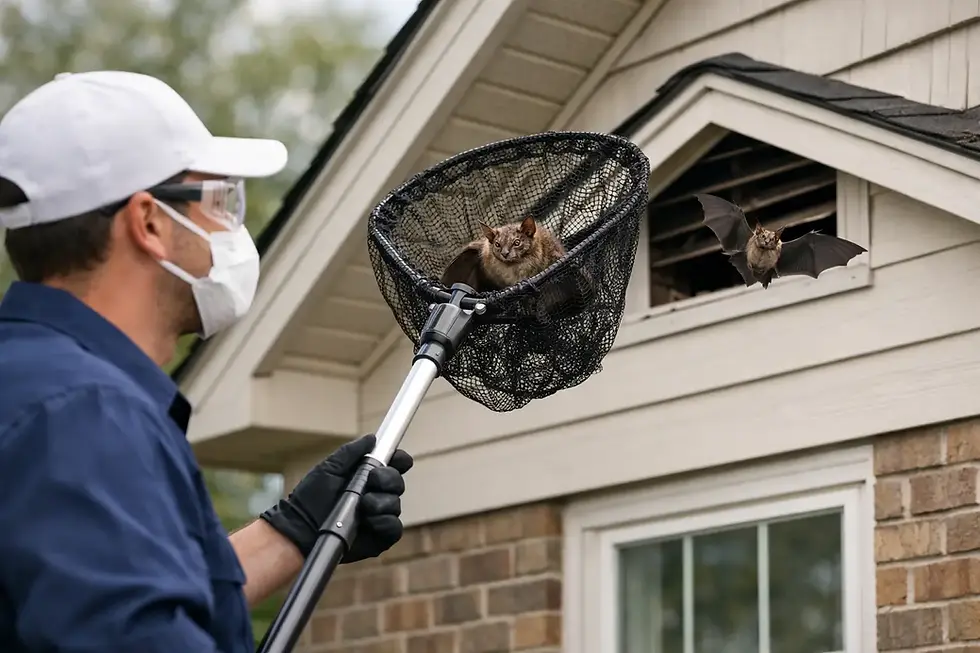
When conditions allow, the main active exit points are fitted with humane one-way exclusion devices. These devices let bats leave to feed but prevent them from getting back into the attic. This approach protects the animals while moving the colony out of the structure without trapping it inside.
The remaining potential entry points are sealed with durable materials designed for the location. A complete exclusion job is more than covering one visible hole. Bats can use narrow gaps along roof edges, behind trim, around vents, and near construction joints, so the entire exterior needs to be evaluated.
Repairs that protect the building
Exclusion repairs should fit the home, not look like an afterthought. Depending on the damage, this may involve securing vent covers, repairing soffits and fascia, sealing roofline gaps, screening appropriate openings, or correcting areas where exterior materials no longer meet tightly.
For landlords and commercial property owners, this full-property approach is especially valuable. One unaddressed opening can lead to recurring calls, tenant complaints, and added cleanup costs. Thorough repairs help protect the building across seasons.
Attic cleanup after the bats are gone
Once the bats have safely exited and the structure is secured, the attic should be evaluated for contamination and damage. Small, localized areas may need targeted sanitation. Larger accumulations of guano or heavily soiled insulation may require more extensive removal and replacement.
Cleanup is not merely about odor control. It helps restore a cleaner indoor environment and gives technicians a clear view of any underlying damage, moisture issues, or remaining access points. If staining or odor has reached adjacent materials, additional repair work may be recommended.
What Homeowners Can Do While Waiting for Service
Keep people and pets away from the affected attic area, and avoid opening access panels repeatedly. Do not attempt to catch a bat, and do not use poison, glue traps, foggers, or smoke. These methods can harm wildlife, create avoidable health concerns, and leave dead animals inside walls or ceilings.
If you see bats leaving at dusk, make note of where they emerge from without standing directly beneath the opening. Avoid blocking that area. Photos from a safe distance and notes about sounds, droppings, or the time of activity can help during an inspection.
If a bat enters the living space, close interior doors to limit where it can travel, keep pets away, and contact a professional promptly. Do not release or handle a bat if there is any possibility it had contact with a person or pet.
Local Bat Removal for South Carolina Properties
South Carolina homes face year-round pressure from wildlife looking for sheltered spaces, and attic conditions can be especially attractive around changing temperatures and storm-damaged rooflines. Whether you own a home in Lexington, manage rentals in Columbia, or maintain a commercial property in the Charleston area, the solution should account for the building's construction and the bats' active season.
Allstar Wildlife provides humane bat removal, detailed exclusion work, wildlife damage repairs, and attic cleanup designed to keep the problem from returning. Fast service matters when you hear activity overhead, but careful timing and complete repairs matter just as much.
If you suspect bats are using your attic, leave the entry points open, avoid disturbing the roost, and schedule a professional inspection before a small opening becomes a larger cleanup and repair project.


Comments