

Signs of a Bat Infestation: What to Do Next
- AllstarWildlifeLLC

- 12 minutes ago
- 5 min read
A faint chirping above the ceiling at dusk can be easy to dismiss at first. Then there is a new odor near the attic access, small dark droppings on the porch, or a bat seen slipping beneath a roofline. These are common signs of a bat infestation, and they deserve prompt attention. Bats are valuable outdoors, but they do not belong in the attic, walls, crawlspace, or living area of your South Carolina property.
For homeowners and property managers in Lexington, Columbia, Charleston, and surrounding areas, early action can limit contamination, prevent damage, and keep a small bat issue from becoming a larger cleanup project. The right solution removes the bats humanely, closes their access points at the proper time, and restores the affected space.
Signs of a Bat Infestation in Your Home
Bats are quiet compared with many nuisance animals, and they often enter spaces that people rarely inspect. That is why an infestation can go unnoticed for weeks or even months. Watch for several clues rather than relying on a single sign.
Droppings near entry points or in the attic
Bat droppings, also called guano, are one of the clearest indicators. They are usually dark, narrow, and pellet-shaped. You may find them beneath gaps along the roofline, near vents, on window ledges, around chimneys, or in attic insulation.
Guano can resemble rodent droppings from a distance, but the removal approach is very different. Avoid sweeping, vacuuming, or disturbing a suspected accumulation yourself. Dry droppings can release dust into the air, and a professional inspection can identify the animal, assess the extent of contamination, and determine what cleanup is needed.
Chirping, scratching, or fluttering after sunset
Bats are most active around dusk and dawn. A colony may make light chirps, squeaks, rustling, or fluttering sounds as bats leave to feed and return before daylight. Noise is often most noticeable from the attic, upper walls, chimney, or behind soffits.
Unlike squirrels, which are often active during the day, bats usually create activity when the house is quiet at night. Still, sound alone is not proof. Birds, rodents, and loose building materials can produce similar noises, so a close inspection matters.
Bats flying around the roof at dusk
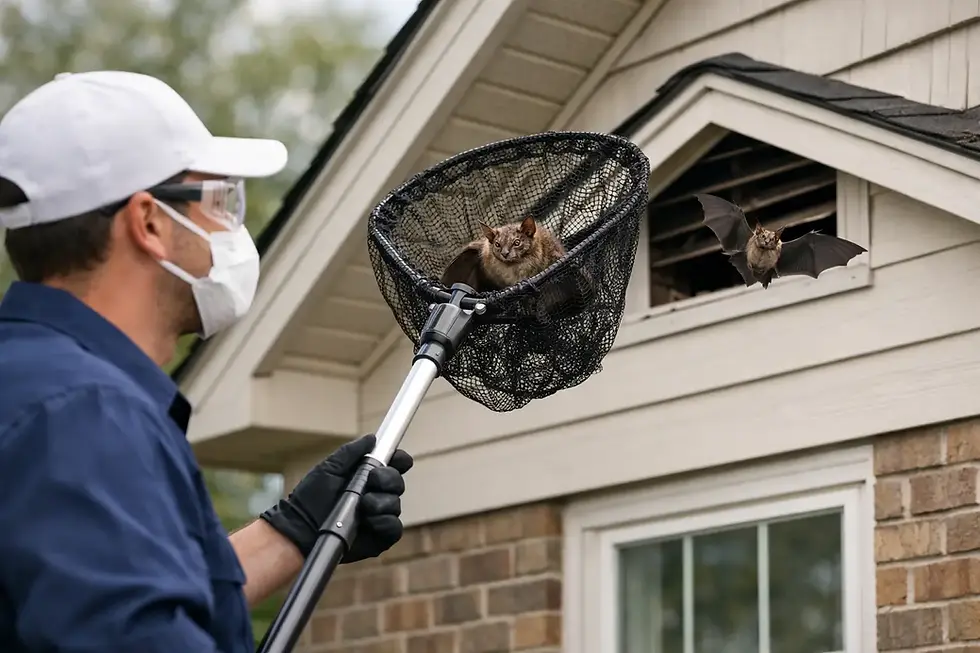
Stand back from the house near sunset and watch the roofline from a safe distance. Seeing one bat occasionally does not always mean bats are living in the structure. Seeing multiple bats repeatedly exit from the same small opening is a much stronger sign of an active roost.
Common access areas include roof and soffit gaps, loose flashing, attic vents, chimney openings, damaged fascia, and spaces where utility lines enter the building. Bats can use openings that look far too small to matter to a homeowner.
Stains and rub marks around gaps
As bats move through the same entry point night after night, oils and dirt from their fur can leave dark, greasy-looking marks around the opening. These stains often appear near vent louvers, eaves, chimneys, and roof intersections.
A stain does not tell you whether bats are currently inside, but it can reveal a long-used access route. This is one reason exclusion work must cover the entire structure, not only the hole where bats were first spotted.
A musty odor in upper rooms or enclosed areas
A growing colony can leave a noticeable odor, especially in hot South Carolina attics. Urine and guano may create a musty, ammonia-like smell that travels into closets, bedrooms, hallways, or commercial spaces below the roost.
Odor can also signal that insulation, drywall, or other materials have been affected. Removing bats without addressing contaminated materials may leave the property with lingering smells and an incomplete repair.
A bat inside the living space
A single bat in a bedroom, hallway, or living room can enter through an open door or window. It can also indicate bats are using voids within the home and have found a path indoors. Keep people and pets away, close the room if possible, and do not handle the bat.
If a bat has been in a room with a sleeping person, young child, or anyone unable to reliably report contact, treat the situation with extra care. Contact the appropriate health authority or medical provider for guidance, and arrange professional assistance with the bat.
Why Bats Choose Attics, Roofs, and Wall Voids
Bats look for sheltered, dark, warm spaces that protect them from weather and predators. An attic with a loose vent screen or small soffit gap provides exactly that. Older homes, properties with storm damage, and buildings with aging roof components are especially vulnerable.
A bat colony may return to a known roost year after year if the opening remains available. That is why trapping or removing one visible bat is rarely a lasting answer. The property needs a careful inspection for active entry points, secondary gaps, and damage that could invite future wildlife problems.
Do Not Seal the Opening Too Soon
The instinct to block a visible hole right away is understandable, but sealing an active bat entry point can create a worse problem. Bats may become trapped inside the structure, move deeper into wall voids, or search for another route into the living area.
Timing also matters because young bats may be unable to fly during part of the maternity season. Humane bat control requires an approach that allows adult bats to leave while preventing them from reentering, and it must be scheduled appropriately to avoid separating flightless young from the colony.
A qualified wildlife professional can determine whether the opening is active, identify the species and likely roosting area, and recommend the right exclusion timing. This protects the animals while protecting your property.
What Professional Bat Removal Should Include
A proper bat solution is more than a one-time removal visit. It starts with a full exterior and interior inspection, including the roofline, vents, chimneys, attic, soffits, wall transitions, and other likely access areas. The goal is to find the colony's route in and every nearby vulnerability.
From there, humane exclusion devices can be installed at active exits when conditions allow. These devices let bats leave to feed but keep them from returning. Once the colony has exited, access points are sealed with durable materials suited to the building area.
The final stage is often just as important. Guano, urine staining, damaged insulation, and affected materials may require cleanup, sanitation, odor treatment, or repair. Allstar Wildlife addresses the full property issue, from humane bat removal and exclusion to wildlife damage repair and attic or crawlspace cleanup, so the space can be clean, secure, and less inviting to future animals.
When to Call for Bat Help
Call for professional bat removal when you see bats leaving the same roof gap, find droppings in the attic or near exterior entry points, hear nighttime activity overhead, or discover a bat inside the building. Commercial owners and landlords should also act quickly when tenants report odors, noises, or repeated bat sightings. Delays can increase cleanup needs and allow the colony more time to establish itself.
Do not use poison, glue traps, or improvised methods. These approaches can be inhumane, may create dead-animal odor problems inside inaccessible spaces, and do not solve the entry-point issue. A professional exclusion plan is the practical path to a permanent result.
If your attic, roofline, or walls are showing signs of bat activity, treat the problem as a property protection issue, not a wait-and-see situation. A timely inspection can give you a clear plan, protect the bats through humane handling, and help return your home or business to the quiet, clean space it should be.


Comments