

Humane Wildlife Removal Lexington SC for Lasting Relief
- AllstarWildlifeLLC
- Aug 8
- 5 min read
A raccoon in the attic is not just an unwanted noise after dark. It can tear insulation, damage ductwork, leave contamination behind, and create a weak point in your roofline. Humane wildlife removal Lexington SC homeowners can rely on addresses the animal you see or hear, along with the conditions that allowed it inside in the first place.
For Lexington property owners, the real goal is not a trap pickup and a temporary quiet attic. It is a safe, clean, secure property that is far less inviting to the next squirrel, rat, bat, or raccoon looking for shelter. That requires a careful inspection, species-appropriate removal, repairs, cleanup, and prevention completed in the right order.
Humane Wildlife Removal in Lexington SC Means More Than Trapping
Humane removal means handling nuisance animals with care while protecting the people and property affected by the problem. It does not mean leaving wildlife inside a home because removal feels difficult. A raccoon can cause extensive damage in a short time, and rodents can contaminate insulation, chew wiring, and reproduce quickly. Prompt professional action protects both the animal and the building.
The right method depends on the species, the location, the season, and whether young animals may be present. A squirrel in a soffit needs a different approach than a snake in a garage, bats in an attic, or feral hogs damaging open land. Humane work requires identifying the animal before choosing traps, one-way exclusion devices, removal methods, or repairs.
This is why a quick visual guess can create bigger problems. Sealing a gap while animals are still inside can trap them in walls or force them into living areas. Removing a mother animal without accounting for dependent young can leave a second issue behind. A trained wildlife professional looks for tracks, droppings, rub marks, nesting material, entry points, and damage patterns before creating a removal plan.
The First Visit Should Find the Entire Problem
Wildlife rarely enters a structure through a perfectly obvious hole. Rats may use a small gap around pipes or foundation vents. Squirrels often exploit damaged fascia, loose soffits, or roof intersections. Raccoons can pull apart weak vents and screens. Bats may enter through narrow construction gaps that are easy to miss from the ground.
A proper property inspection should cover the attic, crawlspace, roofline, vents, exterior walls, garage, chimney, and any nearby conditions drawing wildlife close. Overhanging branches, open trash, pet food, damaged screens, standing water, and cluttered storage areas can all contribute to repeat activity.
The inspection also determines the level of cleanup and repair needed. Some situations involve a single animal that found an open door. Others have been developing for months and may include urine odors, soiled insulation, nesting, damaged wood, chewed materials, or insect activity. The removal plan should match the actual condition of the property, not treat every call as the same problem.
Safe Removal Is Only the First Step
Once the animal has been identified, removal can begin using methods suited to that situation. For animals living in attics, crawlspaces, or wall voids, a controlled exclusion process may be the best option. This allows the animal to exit while preventing reentry after the proper timing and safeguards are in place.
For an animal inside a living space, safety comes first. Keep children and pets away, close interior doors if possible, and avoid trying to corner or handle the animal yourself. Snakes, raccoons, bats, and other wildlife may react defensively when stressed. Do not use poison or attempt an improvised repair that could trap the animal where you cannot reach it.
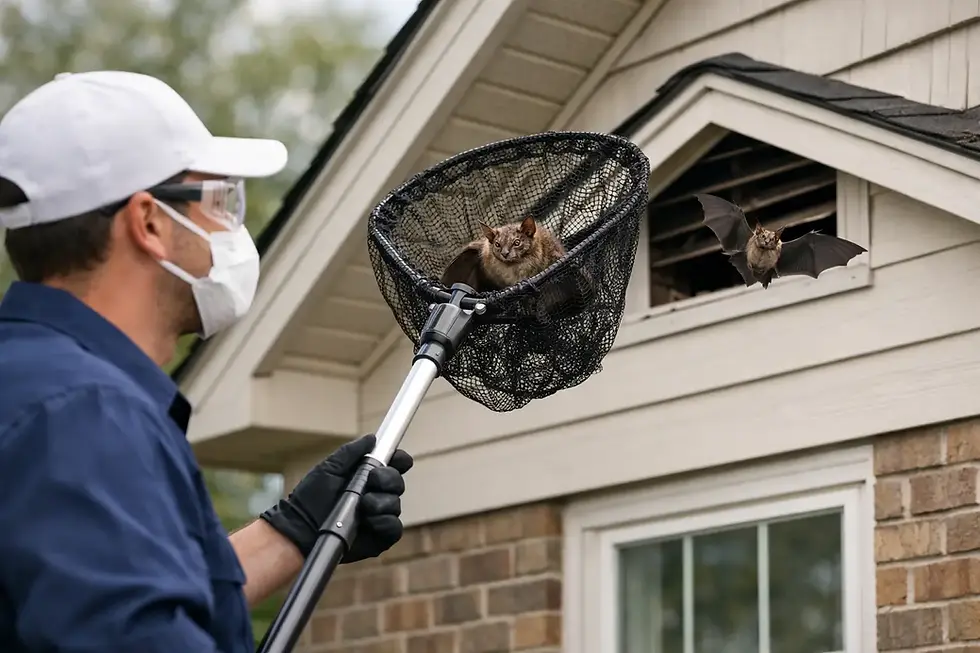
Bats deserve special care. If a bat has been in a room with a sleeping person, child, or pet, avoid direct contact and seek guidance from local health authorities or a medical provider. For attic bat activity, exclusion should be planned carefully and timed correctly. Closing every opening before the colony has safely exited can make the situation worse.
Exclusion Repairs Keep Wildlife From Coming Back
The most valuable part of a wildlife service is often what happens after removal. If a raccoon entered through a broken roof vent and that vent remains weak, another animal may return. If rats used an unsealed utility opening, setting traps without closing the gap will only reduce activity for a while.
Professional exclusion focuses on durable repairs at the vulnerable areas of the home or commercial property. Depending on the inspection, that may include reinforcing vents, repairing soffits and fascia, screening openings, sealing construction gaps, securing crawlspace access, and addressing damaged areas around the roofline.
There is a practical balance here. Not every old cosmetic flaw needs major renovation, but small entry points should not be dismissed because they look minor. Wildlife can enlarge weak areas over time. A repair should be strong enough to keep animals out without creating drainage, ventilation, or maintenance problems for the building.
For landlords and property managers, exclusion work is especially valuable because a recurring wildlife issue can lead to tenant complaints, repair costs, scheduling disruptions, and damage across multiple units. A documented inspection and targeted repairs give decision-makers a clearer path forward than repeated emergency calls.
Cleanup Protects the Space You Cannot See
Animal removal does not automatically make an attic or crawlspace clean. Droppings, urine, nesting debris, food waste, and damaged insulation can remain after the animal is gone. These materials can create odors, attract insects, and leave contamination in an area connected to the rest of the property.
The right cleanup scope depends on what the animals left behind. Light debris may require limited sanitation. A long-term rodent infestation or raccoon den may call for removal of contaminated insulation, detailed cleanup, odor treatment, and restoration of damaged materials. When insulation has lost its effectiveness or become heavily soiled, replacing it can improve both cleanliness and energy efficiency.
This is also the time to inspect for hidden damage. Rodent-chewed wiring, torn ductwork, compromised vapor barriers, and wet or damaged wood should not be overlooked simply because the animal has been removed. A complete solution brings the affected area back to a condition you can trust.
When to Call for Wildlife Removal in Lexington
Call for professional help as soon as you notice repeated scratching, thumping, chirping, droppings, unusual odors, damaged vents, animal tracks, or signs of digging around the foundation. Waiting often gives animals more time to build nests, create additional entry points, and contaminate more of the structure.
Some calls are more urgent than others. A snake inside a home, a bat in an occupied room, an animal trapped in a wall, a raccoon entering living areas, or wildlife causing active damage should be addressed promptly. If an animal appears sick, injured, unusually aggressive, or has had contact with a person or pet, keep your distance and seek appropriate professional or health guidance.
Allstar Wildlife helps Lexington-area homeowners, landlords, and commercial property owners move from a stressful wildlife discovery to a clear plan for removal, repair, cleanup, and prevention. The focus is on solving the problem at the property level, not simply making the animal disappear for a day.
A quiet attic, sealed crawlspace, and clean insulation give you more than relief from an immediate nuisance. They give wildlife fewer reasons and fewer ways to come back. If you are seeing signs of animal activity, schedule an inspection before a small entry point becomes a larger repair.


Comments