

How to Remove Skunk Under a Deck Safely
- AllstarWildlifeLLC

- Aug 15
- 6 min read
A skunk under the deck can turn a quiet evening at home into a problem you smell before you see. The search to “remove skunk under deck” often begins after a pet gets sprayed, a strong odor reaches the crawlspace, or scratching noises start after dark. The immediate goal is getting the animal out safely. The lasting goal is making sure it cannot return - without trapping a mother away from her young or accidentally sealing a skunk inside.
For homeowners and property managers in Lexington, Columbia, Charleston, and nearby South Carolina communities, the safest answer is usually humane removal followed by professional exclusion. Skunks are not looking to cause trouble. A deck offers shade, cover from predators, and a dry place to rest or raise young. But once they settle in, the smell, contamination risk, and chance of a defensive spray make the space unsuitable for sharing.
Why a Skunk Chooses the Space Under Your Deck
Most skunks do not dig an elaborate den from scratch when a ready-made hiding place is available. A deck with open lattice, loose skirting, gaps at the stairs, or an eroded edge gives them protected access with very little effort. They may use an old burrow, move into a void beside the foundation, or enlarge a gap under the deck frame.
Food sources can make the shelter even more appealing. Fallen birdseed, pet food left outdoors, unsecured trash, grubs in the lawn, and outdoor feeding areas can all keep a skunk close to the property. Removing those attractants helps, but it will not solve the problem if the animal already has a den beneath the deck.
Spring and early summer require extra caution. A female skunk may be using the area as a nursery den. If an adult is removed or excluded without checking for young, the babies can be left behind. That can create persistent noises, odor, and an animal welfare issue that is far more difficult to correct.
Do Not Seal the Deck Opening Yet
It is tempting to cover the opening as soon as you spot a skunk. That is one of the most common mistakes homeowners make. Sealing an active den can trap the animal underneath, forcing it to dig farther into the structure, die in the void, or spray when frightened. The odor can then linger around the deck, crawlspace, and nearby rooms for a long time.
Avoid crawling under the deck, poking into the den, or trying to scare the skunk out with a broom, loud noise, water, smoke, or chemicals. Skunks have poor eyesight but a strong sense of smell and a highly effective defense mechanism. Cornering one at close range is the quickest way to get sprayed.
You should also keep children and pets away from the opening. Curious dogs are especially likely to approach a skunk and get sprayed in the face. Although not every skunk carries disease, wildlife can expose people and pets to parasites and illnesses, including rabies. Never handle a skunk or attempt to move one by hand.
How Professionals Remove a Skunk Under a Deck
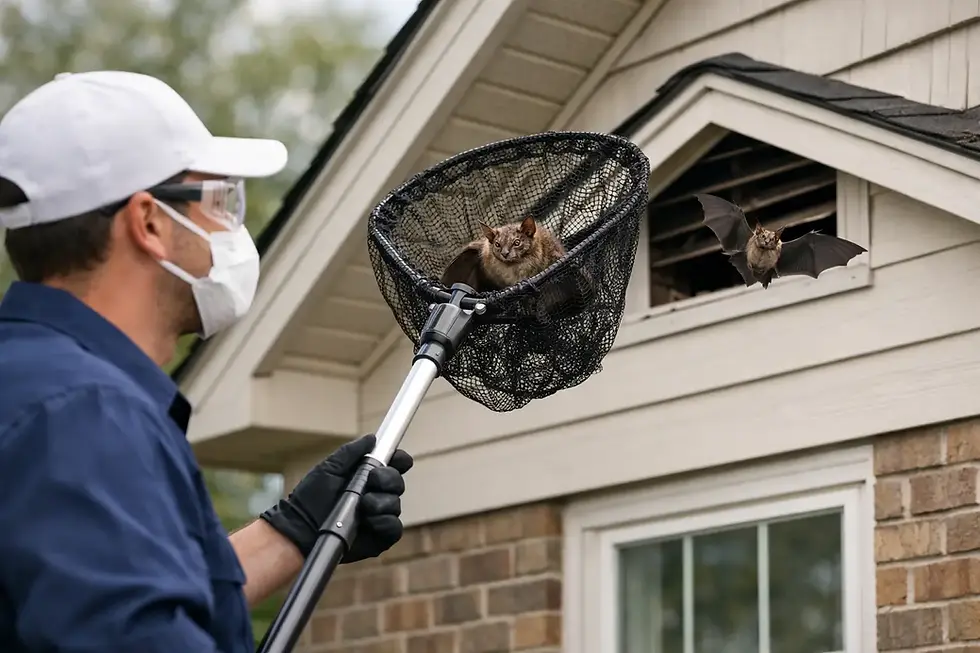
Humane skunk removal is more than setting a trap near the opening. The property must be inspected first to identify every access point, determine whether the animal is actively denning, and check for signs of young. This is what prevents a quick fix from becoming a recurring issue.
A trained wildlife technician may use a carefully placed humane trap when appropriate, especially if the skunk is regularly entering and exiting at a known location. In other situations, a one-way exclusion device is the better option. This allows the skunk to leave but prevents it from getting back underneath. The method depends on the deck design, the season, the animal’s behavior, and whether dependent young may be present.
Once the skunk is confirmed out, the work shifts to exclusion. Heavy-gauge screening or a durable barrier is installed around the deck perimeter and buried below grade where needed. This stops skunks from digging underneath while also discouraging opossums, raccoons, rodents, and other nuisance wildlife from using the same protected area.
Allstar Wildlife approaches skunk problems as a full-property issue, not just a trapping visit. That means identifying what drew the animal in, securing the vulnerable area, and addressing damage or contamination when it is present. A properly excluded deck gives you far better peace of mind than repeatedly removing animals from the same opening.
What happens if there are baby skunks?
Young skunks cannot simply be ignored or left behind. A professional will assess the denning situation and use a humane plan that keeps the family together whenever possible. Timing matters. Some exclusion work needs to wait until the young are mobile enough to leave with the mother, while other situations require specialized removal methods.
This is a major reason DIY trapping can go wrong. Catching an adult may seem successful for a day or two, but distressed young left under the deck can create a new emergency.
Why Repellents Rarely Provide a Reliable Fix
Home remedies are popular because they appear simple. Bright lights, ammonia-soaked rags, mothballs, predator urine, and ultrasonic devices are often suggested as ways to drive skunks away. In practice, their results are inconsistent, short-lived, or unsafe for the property and people around it.
Mothballs and chemical products should never be spread under a deck. They can be harmful, may be used in ways that violate label instructions, and do not address the open access point. Strong odors may annoy a skunk temporarily, but a sheltered den is often worth tolerating, especially during cold weather or while raising young.
Repellents also create a timing problem. If they cause a mother to abandon the area while babies remain hidden below, the outcome is worse than the original skunk visit. Effective wildlife control is based on inspection, safe removal, and physical prevention - not a product that has to be reapplied every few days.
Steps You Can Take While You Wait for Service
There are sensible steps homeowners can take without approaching the skunk. Keep pets on a leash in the yard and use a different exit if the deck is near a door. Bring pet food inside, clean up spilled birdseed, secure garbage lids, and pick up fallen fruit if applicable. These changes reduce reasons for wildlife to stay nearby.
At night, use exterior lighting from a safe distance so you can see where you are walking, but do not shine a light directly into the den. If you notice a skunk out in the open, give it room. Move slowly, avoid sudden movements, and do not try to make it leave faster. A skunk that does not feel threatened is much less likely to spray.
If a pet is sprayed, keep it outside and away from furniture until it can be cleaned. Call your veterinarian promptly if the spray reached the eyes or if there was any bite, scratch, or direct contact with the animal.
Signs the Problem May Be Bigger Than One Skunk
A single skunk may be passing through, but repeated odor and activity under the deck usually point to an established den. You may notice a shallow dug-out entrance along the deck edge, disturbed mulch, paw prints, or nighttime rustling. A persistent musky odor near the foundation can mean the skunk has sprayed because it was startled, threatened, or trapped.
It is also possible for more than one wildlife species to use the same vulnerable area over time. If the deck perimeter is open, removing one skunk without repairs leaves the invitation in place for another skunk, an opossum, or a raccoon. This is why durable screening and ground-level reinforcement are essential.
Get the Deck Secured Before the Smell Spreads
A skunk under the deck is stressful, but it is manageable with the right sequence: inspect the den, remove or exclude the animal humanely, confirm the space is clear, and secure every entry point. The right approach protects your family, pets, property, and the animal itself.
If you smell skunk near your deck, hear activity after dark, or find a fresh opening along the perimeter, do not wait for the problem to grow. Arrange professional wildlife help before an active den becomes a lingering odor, a pet emergency, or a preventable repair issue.


Comments