

Bat Removal in Charleston SC Done Safely Today
- AllstarWildlifeLLC

- Aug 10
- 5 min read
A bat slipping through a roof gap at dusk may seem like a small problem. Once bats begin using an attic, wall void, chimney, or crawlspace as a roost, the issue can grow quickly. Professional bat removal Charleston SC property owners can rely on is about more than getting bats out for one night. It means finding where they entered, allowing them to leave safely, sealing the structure correctly, and dealing with the contamination left behind.
For homeowners, landlords, and commercial property managers, the goal is clear: restore a clean, secure property without creating a larger problem inside the building.
Why Bats Choose Charleston Properties
Charleston's warm climate, mature trees, humid summers, and mix of historic and newer construction give bats plenty of places to roost. They can enter through openings that are easy to overlook, including loose soffits, roofline gaps, damaged vents, chimney spaces, warped fascia boards, and separations around utility lines.
Bats are not trying to damage a property. They are looking for a quiet, protected place to rest during the day and raise young. But an attic or wall cavity is not a safe place for bats or for the people using the building. Their droppings can build up, odors can spread into living areas, and small access points can become an ongoing wildlife entry route.
A single bat seen indoors does not always mean there is an established colony. It may have entered accidentally through an open door, fireplace, or damaged screen. Repeated sightings at dusk, scratching or chirping sounds above the ceiling, droppings near the exterior, or a strong musty odor are stronger signs that bats may be roosting in the structure.
Bat Removal in Charleston SC Requires Exclusion, Not Trapping
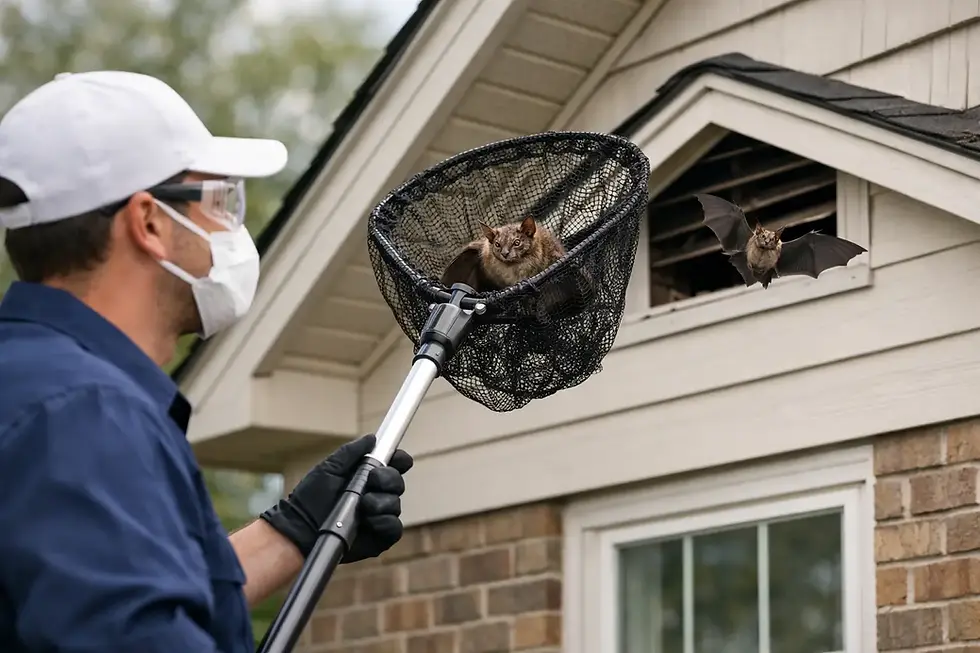
The safest long-term solution is humane exclusion. This process lets bats leave their roost but prevents them from getting back inside. A trained wildlife technician first inspects the property to locate active entry points, then installs one-way exclusion devices at the openings bats are using. Secondary gaps are sealed so the animals cannot simply move to another part of the roofline or wall.
This matters because sealing an active opening without a proper exit route can trap bats inside. That can lead to bats entering living spaces, dying in inaccessible areas, or creating new escape holes elsewhere. A rushed repair may solve the visible problem for a day while making the overall situation worse.
Timing also matters. Bat removal work must account for seasonal restrictions and the presence of flightless young. When baby bats cannot yet fly, excluding the adults can leave the young trapped inside. A responsible plan considers the species, the roost location, the time of year, and local conditions before exclusion work begins.
What a Professional Bat Service Should Address
A bat problem rarely begins and ends at one hole in the roof. Properties need a full assessment because bats can use multiple entry points, particularly on larger homes, older buildings, apartment complexes, churches, warehouses, and commercial structures.
A complete service starts with an exterior and interior inspection. The technician looks for staining around entry gaps, droppings on siding or attic surfaces, damaged screens, loose building materials, and routes bats use to reach the roost. Attics, crawlspaces, rooflines, vents, chimneys, and wall penetrations all need attention.
After the bats have exited, the work should include durable exclusion repairs. Depending on the property, that may mean securing vents, repairing soffit or fascia damage, screening potential access areas, sealing construction gaps, or reinforcing vulnerable roofline transitions. The exact repair plan depends on how the building was constructed and where bats are active.
Cleanup is another major part of the job. Bat guano can accumulate beneath a roost and may contaminate insulation, wood framing, stored belongings, and air pathways. Cleanup may involve removing contaminated material, sanitizing affected surfaces, controlling odor, and replacing damaged insulation when necessary. This is especially valuable for property owners preparing a home for sale, managing rental units, or trying to protect indoor air quality.
Do Not Handle a Bat Inside Your Home
If a bat is flying in a living space, keep people and pets away from it. Close interior doors to limit where it can travel, and avoid trying to swat it, chase it, or pick it up. A frightened bat may hide in curtains, behind furniture, or in tight gaps where it becomes harder to locate.
Use extra caution if the bat was found in a room where someone was sleeping, if a child was present, or if a pet may have had contact with it. Contact the appropriate health authority or medical professional for guidance on potential exposure, then arrange for qualified wildlife assistance. Never handle a bat with bare hands.
If the bat is clearly coming from an attic, wall, or chimney, the indoor sighting is usually a symptom of a larger exclusion issue. Removing one animal from the room does not address the roost or the opening that allowed it into the structure.
Signs You Should Schedule Service Quickly
Some bat issues can wait for a scheduled inspection, but others deserve prompt attention. Call for help when bats are repeatedly entering occupied rooms, a strong odor is spreading through the home, droppings are accumulating near attic access areas, or bats are visible leaving from several points along the roofline.
Commercial and multifamily properties should act early as well. A small roost near an exterior entry, upper-floor unit, storage area, or customer-facing space can become a liability and tenant concern. Early inspection gives property managers more options for planning exclusion and repairs before the problem spreads.
It is also wise to schedule an inspection after roof work, storm damage, or siding repairs. Construction changes can expose gaps that bats and other wildlife find quickly. Addressing those openings while they are small is usually simpler than dealing with a long-established roost later.
Why DIY Bat Removal Often Falls Short
Homeowners sometimes try expanding foam, hardware cloth, bright lights, sound devices, or repellents. These methods can create problems when they are used without first identifying every active opening. Foam alone can fail in weather-exposed areas, and sealing only the most obvious gap can force bats deeper into the building or toward an unsealed route.
Repellents and ultrasonic devices are also unreliable for established roosts. Bats are motivated by shelter, and a property with accessible gaps can remain attractive even after a temporary disturbance. The solution is physical exclusion combined with repairs that close off the access route for good.
The trade-off is that professional work takes careful inspection and proper timing. It is not a one-size-fits-all trap-and-release visit. That extra attention is what helps protect the structure, prevents accidental entrapment, and reduces the chance of another wildlife problem at the same vulnerable areas.
Protecting Your Property After Bat Exclusion
Once exclusion and repairs are complete, regular maintenance helps keep the building protected. Watch rooflines after high winds, keep attic and gable vents secure, repair loose trim promptly, and inspect around chimneys, utility penetrations, and exterior siding. Tree branches should also be kept from resting against the roof, since they can give wildlife easy access to upper parts of the structure.
For owners of older Charleston homes, periodic inspections are especially worthwhile. Historic character often comes with aging trim, settling materials, and hidden voids that can become wildlife entry points. The right repairs preserve the property while closing off the gaps animals use.
Allstar Wildlife provides humane bat removal, exclusion, cleanup, and repair services designed to solve the entire property problem, not just the bat you happened to see. If bats are using your attic, walls, roofline, or commercial building, getting a knowledgeable inspection now can prevent a stressful issue from becoming a larger cleanup and repair project later.
A quiet attic should stay quiet. Address the entry points, protect the people inside, and give the bats a safe route out of the structure where they belong.


Comments