
How to Clean Raccoon Droppings in Your Attic

A raccoon attic problem rarely starts with a mess you can see from the hallway. It often starts with scratching after dark, a strong odor near a ceiling vent, or stains that appear after rain. If you searched clean raccoon droppings attic, the safest answer is to slow down before grabbing a broom or shop vacuum. Raccoon waste can contaminate insulation, framing, stored belongings, and the air you breathe while cleaning.
The immediate goal is not simply to make the attic look better. It is to confirm the raccoons are gone, clean contamination without spreading it through the home, repair the damage, and close the routes that allowed the animals inside. Skipping any one of those steps can leave a property vulnerable to repeat problems.
Why raccoon droppings in an attic need careful cleanup
Raccoons commonly use one area of an attic as a latrine. Their droppings are usually dark, tubular, and blunt-ended, often larger than dog feces. You may find them concentrated near a soffit opening, chimney chase, damaged roofline, or quiet corner of the attic. Urine can soak deeply into insulation and wood, creating odors that linger long after the animal leaves.
The concern is more than the smell. Raccoon feces can contain parasites, including raccoon roundworm eggs. Dried material can break apart when swept, vacuumed, or handled roughly. That can spread contaminated dust onto nearby surfaces, stored items, and clothing. The risk varies based on the amount of waste, how long it has been present, the attic layout, and who may be exposed, but it is not a job to treat casually.
An attic may also contain damaged wiring, weakened drywall, wet insulation, sharp roofing materials, and poor footing. For homeowners, landlords, and property managers, professional cleanup is often the safer and more complete choice when droppings are widespread or the infestation has been active for more than a day or two.
Do not clean until the raccoon problem is resolved
Cleaning a latrine site while raccoons are still using the attic is frustrating and risky. The animals can contaminate the same location again that night, and a mother raccoon may have young that cannot leave on their own. Sealing an entry hole without checking the attic can trap animals inside and create an even worse odor and damage issue.
Listen for movement, especially at dusk and dawn. Look from the ground for displaced soffits, bent vents, torn screens, roof gaps, loose fascia, or openings around utility lines. Avoid climbing onto a roof or reaching into tight attic spaces to investigate an active animal. A raccoon that feels cornered can bite or scratch, and direct contact is never worth the risk.
Humane removal should come first. Once the animals and any dependent young have been addressed, the attic can be inspected for all contaminated areas and access points. This order matters because permanent exclusion works only after every raccoon is safely out.
How to clean raccoon droppings from an attic safely
A small, fresh dropping in an otherwise clean and accessible attic may be manageable with the right protection. Large piles, dried droppings, urine-soaked insulation, or contamination near HVAC equipment call for trained cleanup. Do not use a household vacuum, leaf blower, dry broom, or compressed air. Those methods can send particles into the attic and beyond it.
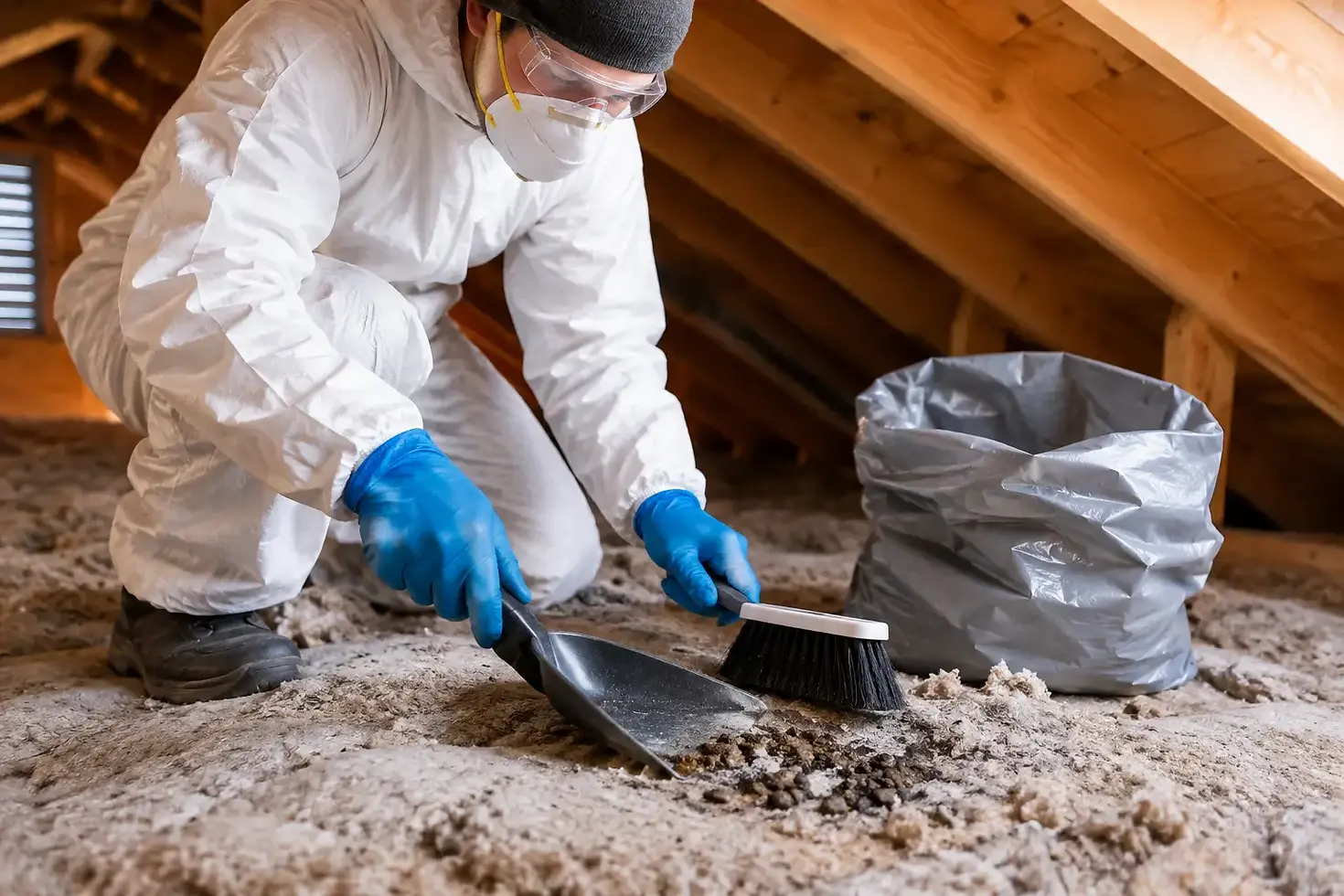
Before entering, keep children, pets, and anyone with respiratory concerns away from the work area. Wear disposable gloves, protective coveralls or washable outer clothing, eye protection, and a properly fitted respirator rated for fine particles. Open safe attic ventilation where possible, but do not create strong airflow that blows debris around.
Lightly mist droppings and the immediately surrounding material with an appropriate disinfecting solution so debris is damp, not dripping. Let it sit according to the product directions. Then carefully pick up the waste with disposable towels or a scoop that can be cleaned and disinfected. Place contaminated material directly into a sturdy bag, seal it, and place that bag inside a second bag before disposal according to local requirements.
Hard, nonporous surfaces should be cleaned and disinfected after visible waste is removed. Avoid saturating wood framing or drywall, since excess moisture can lead to other property problems. Wash reusable tools separately, remove protective gear without touching its contaminated exterior, and wash hands thoroughly with soap and water.
That process may sound straightforward, but attic contamination is rarely limited to what is visible. Droppings can be tucked behind ducts, under loose insulation, and along framing members where raccoons traveled. A cleanup that misses these areas can leave odors and contamination behind.
When insulation should be removed
Insulation is porous. Once it has been heavily soiled with feces or urine, surface disinfecting is usually not enough. It may continue to hold odor, attract other wildlife, and reduce the insulation's performance. In many cases, affected insulation needs to be carefully removed, bagged, and replaced after the attic has been cleaned and deodorized.
The right scope depends on the damage. A single localized spot may only require limited removal. A long-term raccoon den can require removal across a much larger section of the attic. An inspection helps determine where contamination ends so you do not pay to replace clean material or leave damaged material behind.
Protect the home after attic cleanup
Cleanup without exclusion is only a temporary reset. Raccoons are strong, persistent climbers that can pull apart weak vent covers, exploit loose soffits, and return to an opening they have used before. Once an attic is clear, every likely access point should be inspected and repaired with materials designed to stand up to wildlife pressure.
Common repair areas include roof vents, gable vents, fascia boards, soffit returns, chimney gaps, and openings where rooflines meet. Tree limbs hanging over the roof can also give raccoons an easy route to the attic, though trimming should be considered alongside the actual entry-point repairs. Cutting a branch alone will not close an opening in the structure.
It is also wise to check exterior trash storage, pet food, bird feeders, and standing water around the property. These items do not create a roof hole, but they can give raccoons a reason to stay close to the building. For rental and commercial properties, documenting the damage and repairs also helps establish a clear maintenance record.
When to call for professional raccoon cleanup
Call for help right away if you see multiple piles of droppings, strong urine odor, stained ceilings, chewed wiring, damaged ductwork, disturbed insulation, or signs that raccoons may still be inside. The same applies when you suspect young raccoons are present, cannot safely access the attic, or do not know how the animals got in.
A full-service wildlife professional can handle the problem in the right sequence: humane removal, attic inspection, contaminated-material removal, disinfection, odor control, damage repair, and exclusion. That coordinated approach prevents the common cycle of trapping one raccoon, cleaning one corner, and then dealing with another attic invasion weeks later.
For homeowners and property managers in Lexington, Columbia, Charleston, and surrounding South Carolina communities, Allstar Wildlife can assess the entire property instead of treating the droppings as an isolated mess. You deserve an attic that is clean, secure, and no longer inviting wildlife back inside.
A raccoon latrine in the attic is stressful, but it is a solvable property problem. Keep people and pets away from the area, avoid dry cleanup methods, and make sure removal, sanitation, and exclusion are handled as one complete job. That is how an unpleasant attic discovery becomes a safer home and real peace of mind.


Comments